Learn Piano at Home: A Complete Beginner Plan
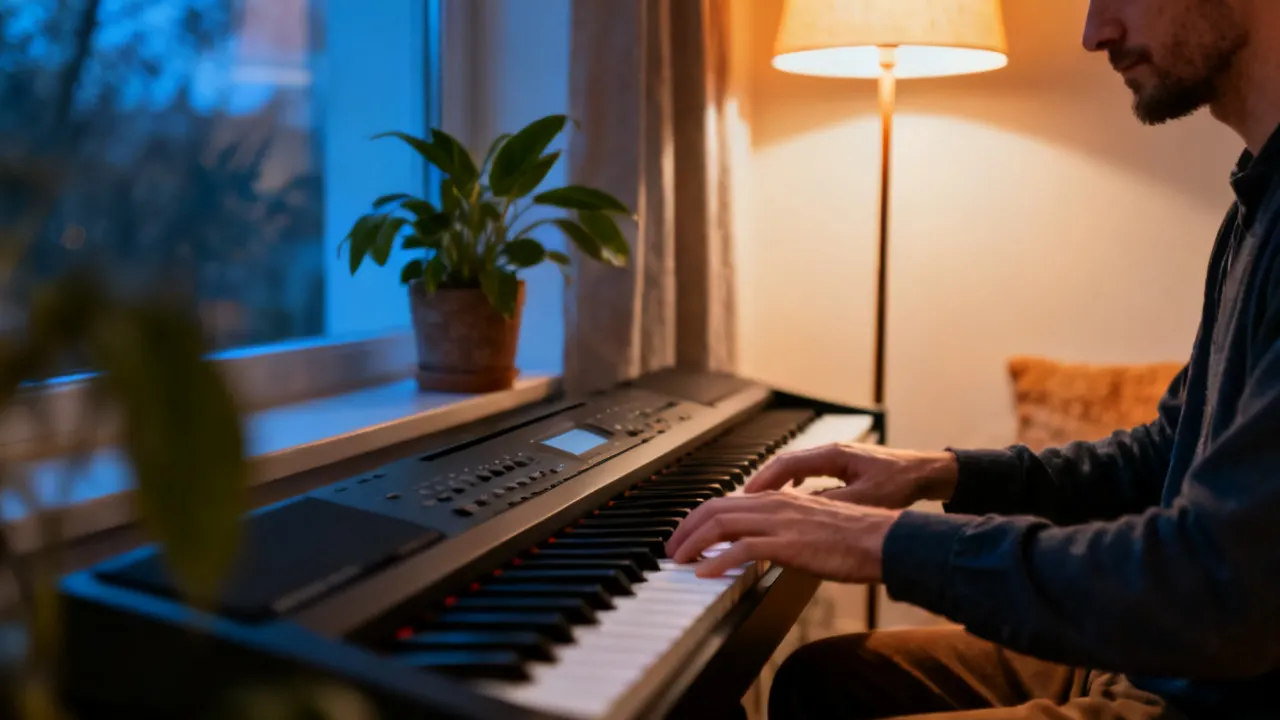
You can learn piano at home with a modest setup, a clear plan and ten minutes a day. There is no need to find a studio, book a weekly slot or buy an expensive instrument. What you need is a keyboard you can reach without effort, a sequence that tells you what to do next, and a habit that survives busy weeks. This guide walks you through each of these.
Step 1: Choose your instrument
A digital piano or keyboard is the practical choice. It costs less than an acoustic piano, needs no tuning, takes up little space, and has a headphone jack so you can play any hour.
What to look for:
- Full-size keys. Make sure the keys are standard width so your hands learn the right distances.
- Key count. Sixty-one keys will cover your first months. Seventy-six or eighty-eight keys give you room to grow.
- Weighted or semi-weighted action. Keys that resist slightly feel closer to an acoustic piano and build finger strength. Unweighted keys are fine if budget is tight.
- Touch sensitivity. Keys that respond to how hard you press help you learn dynamics.
- A headphone output. Essential for flexibility.
If buying new feels like a leap, consider a second-hand instrument from a reputable seller, or ask whether a local shop offers rentals. Test the keys if you can.
Step 2: Create a corner you will actually use
Location matters more than people expect.
- Place the instrument where you pass it daily. The living room often works better than a spare room.
- Use a stable stand and a proper seat. Your forearms should be level with the keys, wrists relaxed, feet flat.
- Light it well. A lamp that illuminates the keys and the music stand without glare.
- Keep it ready. Leave it plugged in with headphones nearby. Every step you remove makes practice more likely.
- Add a small notebook and pencil for your practice log.
Step 3: Pick your learning path
Without a teacher, a clear structure is the single most valuable thing. You have three main options, and many people mix them.
A course. A series of lessons in order, with a syllabus you can read beforehand. See our guide to piano courses for beginners.
A guided app. An app that asks about your level and goals and builds a plan. Keyora works this way, with a short quiz leading to courses, a songbook and challenges. See the app checklist to compare options.
Live online lessons. Video lessons with a teacher add feedback; see online piano lessons for adults.
Whichever you choose, commit to it for at least four weeks before judging. Switching every few days resets your progress.
Step 4: Your first four weeks at home
Week 1: Keys and posture. Learn the key names and find middle C. Practice sitting well. Play five-note patterns with each hand, slowly.
Week 2: First melodies. Play two or three simple tunes with the right hand. Count aloud and aim for an even pulse.
Week 3: Both hands. Add a held note or simple pattern in the left hand. Play short two-hand phrases at a slow tempo.
Week 4: First chords. Learn two chords and use them to accompany a song. Our chord guide shows where to start.
At the end of the month, record yourself playing your favorite piece. Keep the recording; you will want to compare it later.
Step 5: Build a daily routine
Ten to fifteen minutes a day is a strong target. Use this simple frame:
- 2 minutes: warm up with slow five-finger patterns.
- 4 minutes: new skill or lesson.
- 4 minutes: song practice.
- 2 minutes: play for fun.
Pick a regular cue, such as after breakfast or before dinner. Our practice routine guide offers ten, twenty and thirty-minute templates.
What to do without a teacher
The main risk of learning alone is picking up habits that cause tension or limit progress. Reduce it with a few checks.
- Posture check. Sit tall but relaxed. Shoulders down, elbows loose, wrists level.
- Finger shape. Keep fingers gently curved, as if holding a small ball.
- Record yourself on video. Watch your hands from the side once a week. Look for stiff wrists, collapsed fingers or raised shoulders.
- Slow down. Most errors come from playing too fast.
- Stop at discomfort. Pain is not part of learning. Rest and adjust.
- Consider an occasional lesson. A single session with a teacher every month or two can catch issues early.
Keeping motivation high alone
No one else will notice if you skip, so you need your own systems.
Set a mini performance. Promise yourself you will play a song for a friend or family member by a certain date.
Keep a streak calendar. Mark each day. Do not break the chain twice in a row.
Rotate music. Always have an easy song, a medium one and a stretch goal.
Reward progress. Treat yourself when you complete a course module or a song.
Share it. Tell someone what you are learning. A little accountability goes a long way.
Troubleshooting common problems
"I do not have time." Reduce the target to five minutes. A tiny session still counts.
"My family hears my mistakes." Use headphones and practice when you feel comfortable.
"I feel stuck." Switch to a different song or revisit an earlier lesson. Plateaus pass.
"The keyboard feels cheap." It can feel unfamiliar, but you can learn plenty on it. Upgrade when you know you will keep playing.
"I do not understand the theory." Learn it in small pieces as it appears. Reading notes is a good first topic.
Accessories that are worth it
Most extras are optional, but a few small things make home practice smoother.
- Headphones with a long cable. You can sit comfortably and move without unplugging.
- A metronome app. A steady click trains your sense of timing. Start at a slow tempo and raise it gradually.
- A music stand or tablet holder. Eye-level material keeps your neck relaxed.
- A sustain pedal. Many keyboards include one. Use it later, once your fingers are steady.
- A small footrest if you are short. Feet that dangle make you unstable.
- A cloth cover. It keeps dust off and, when you feel like a break, signals the end of the session.
None of this is essential on day one. Start simple, add one thing at a time and keep the setup uncluttered.
Your first month at a glance
By the end of month one, a steady beginner at home can name the keys, play a few simple melodies, use both hands in small phrases and begin playing basic chords. That is a real foundation. From there, the next months bring more songs, smoother chord changes and the first taste of reading music.
Summary
Learning piano at home is realistic and rewarding. Choose a full-size keyboard, put it where you will see it, pick a clear learning path, practice for ten minutes a day and keep your music fun. In a few weeks your home will sound different, and you will be the one making it so.