Learn Piano as an Adult: A Realistic Starter Plan
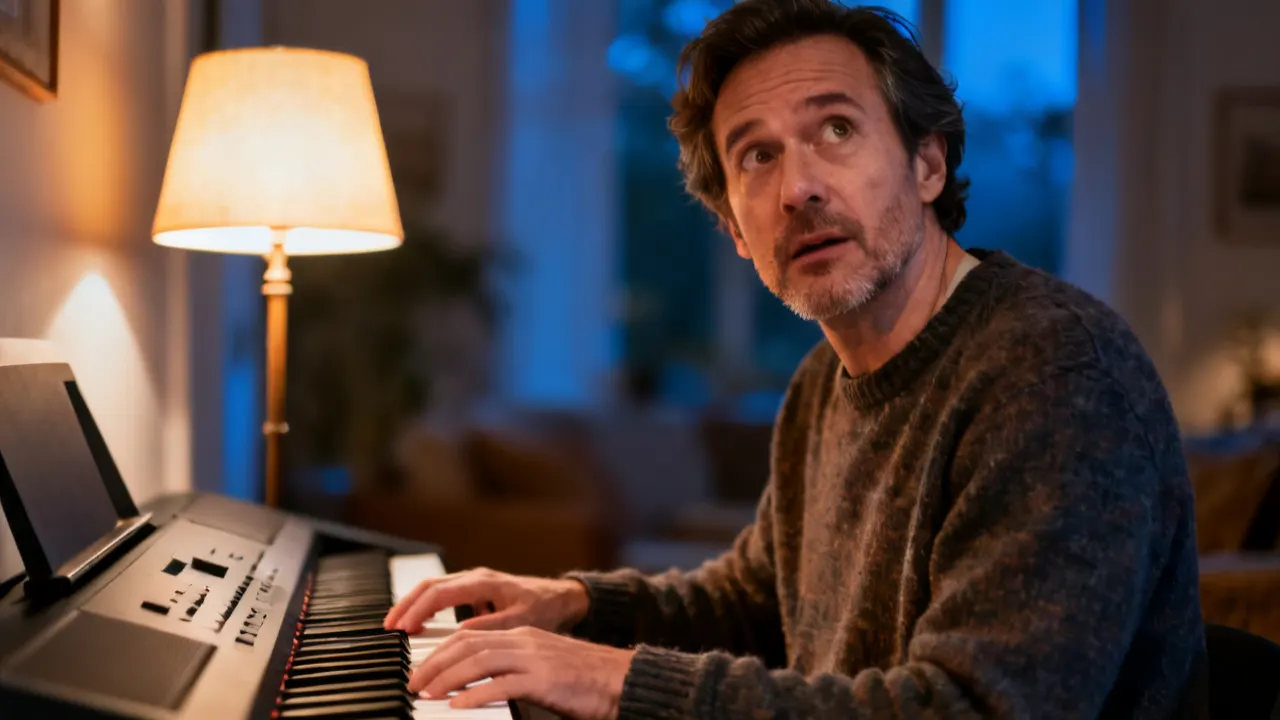
Yes, you can learn piano as an adult, and you have real advantages over a child. You understand why you are practicing, you can follow a plan, and you choose the music. The things that hold adults back are not age or talent. They are time, patience with the awkward first weeks, and not knowing what to do next. This guide gives you a plan for all three.
Why adults can learn faster than they think
Children absorb music naturally, but they are also easily distracted, and they rarely practice without a parent nudging them. Adults bring different strengths.
- Focus. You can concentrate on a ten-minute exercise and see why it matters.
- Pattern recognition. Chords, scales and rhythm are patterns. Adults find them quickly once someone points them out.
- Self-direction. You can decide to work on a weak spot instead of waiting to be told.
- Music taste. You know what moves you, and that is the best fuel for practice.
What adults lack is the spare time of a student. So the plan below is built around small, repeatable sessions rather than marathon ones.
The mindset that keeps adults going
Expect an awkward stage. In the first two or three weeks your fingers will not follow your brain, and your left hand will feel like it belongs to someone else. This is normal and temporary. It is a motor skill, and motor skills improve with repetition and sleep.
Set your expectations in terms of small, specific wins rather than "be good at piano". For example: play a five-note pattern evenly, name every white key without counting, play a simple tune with both hands. Each is a win you can check off.
A four-stage plan for adult beginners
Stage 1: Know the keyboard (week 1)
Learn the pattern of two and three black keys, find middle C and say the white-key names as you play them. Do this with each hand separately for five minutes. If you want a deeper walkthrough of notation later, how to read piano notes breaks it down.
Stage 2: Hand position and first melodies (weeks 2 and 3)
Rest each hand on five neighbouring keys, one finger per key. Play simple melodies in that position. Aim for steady rhythm over speed. Count aloud. This stage builds finger independence, which is the foundation of everything else.
Stage 3: Two hands together (weeks 3 to 6)
Combine a simple melody in the right hand with one held note or an easy pattern in the left. Start slowly, loop a two-measure phrase, then extend. Do not be afraid of repetition. A phrase played well twenty times is a phrase learned.
Stage 4: Chords and songs (weeks 5 to 8)
Learn two or three basic chords and use them to accompany a song. This is when the instrument starts to feel like music rather than exercise. Our guide to piano chords for beginners gives you the order to learn them in, and easy piano songs for beginners lists good first targets.
These timeframes are rough guides. If you are practicing ten minutes on most days you may move more slowly. If you can do twenty, you may move faster. Both are fine. For a more detailed view, read how long it takes to learn piano.
How to fit piano into an adult life
The hard part is not learning, it is finding the time. Try these approaches.
Anchor it to an existing habit. After coffee, before dinner, when the kids are in the bath. A cue beats a time.
Make the start tiny. Tell yourself you will play for two minutes. Most days you will continue.
Keep the instrument ready. Leave the lid open or the keyboard on its stand. Setup friction kills habits.
Use headphones. They remove the fear of disturbing others and let you practice late.
Track a streak, but forgive misses. A calendar with a mark each practice day is motivating. If you skip a day, never skip two.
If you want to see how to structure your sessions minute by minute, the piano practice routine guide gives you a ten and a twenty minute template.
What to buy, and what to skip
- Buy: a digital piano or a full-size keyboard, a sturdy bench, headphones, a music stand.
- Maybe: a metronome app (many are available on your phone) and a notebook.
- Skip for now: expensive acoustic pianos, stacks of method books, and apps you will not open.
Your best investment at the beginning is a clear plan. Whether that is a teacher, a course or a guided app such as Keyora, which builds a path from your quiz answers and gives you courses, a songbook and challenges, depends on your preferences. The point is not to spend more; it is to remove decisions so you can spend your energy playing.
Choosing songs that keep you motivated
Pick songs you love, then find simplified arrangements. A beginner version of a ballad you adore will keep you practicing far longer than a perfect version of a drill. Choose from three buckets:
- A quick win. Something with a short, repeating melody you can play within a week.
- A stretch. A song that needs a new skill, such as a chord change.
- A dream song. The piece you want to play someday. Keep it on the music stand as a reminder of where this is heading.
Rotate through these so your practice always includes something fun, something challenging and something aspirational.
Common adult worries, answered
"I have no sense of rhythm." Rhythm is trainable. Clap along with a steady beat, count aloud and play very simple patterns. Over time it becomes natural.
"My hands are not flexible." Piano does not require extreme flexibility. Start with relaxed, curved fingers and gentle warm-ups. If you feel pain, stop and adjust your posture and seat height.
"I do not know music theory." You do not need much to begin. A bit of theory helps you learn faster, and you can pick it up as you go.
"I am too old." Learning an instrument is open to every age. If you are later in life, piano lessons for seniors covers pacing and comfort.
"I tried before and quit." Look at why. Too hard? Too boring? No time? Adjust that one thing and try again with a smaller commitment.
A week-by-week checklist
- Week 1: I can find middle C and name white keys without counting.
- Week 2: I can play five notes up and down with each hand evenly.
- Week 4: I can play a short melody with my right hand and count the beat.
- Week 6: I can play two hands together on a simple phrase.
- Week 8: I can play a simple song with a melody and a couple of chords.
Print this list or write it in your notebook. Cross items off as you reach them. If you are behind, do not jump ahead. Stay with the step until it feels comfortable.
Final thought
Learning piano as an adult is less about talent and more about design: a small daily habit, a clear path, songs you care about, and a setup that makes starting easy. Do ten honest minutes tomorrow, then ten the day after, and let the small wins stack up. In two months you will look back at the person who thought it was too late and smile.