Piano Lessons for Seniors: A Gentle, Practical Start
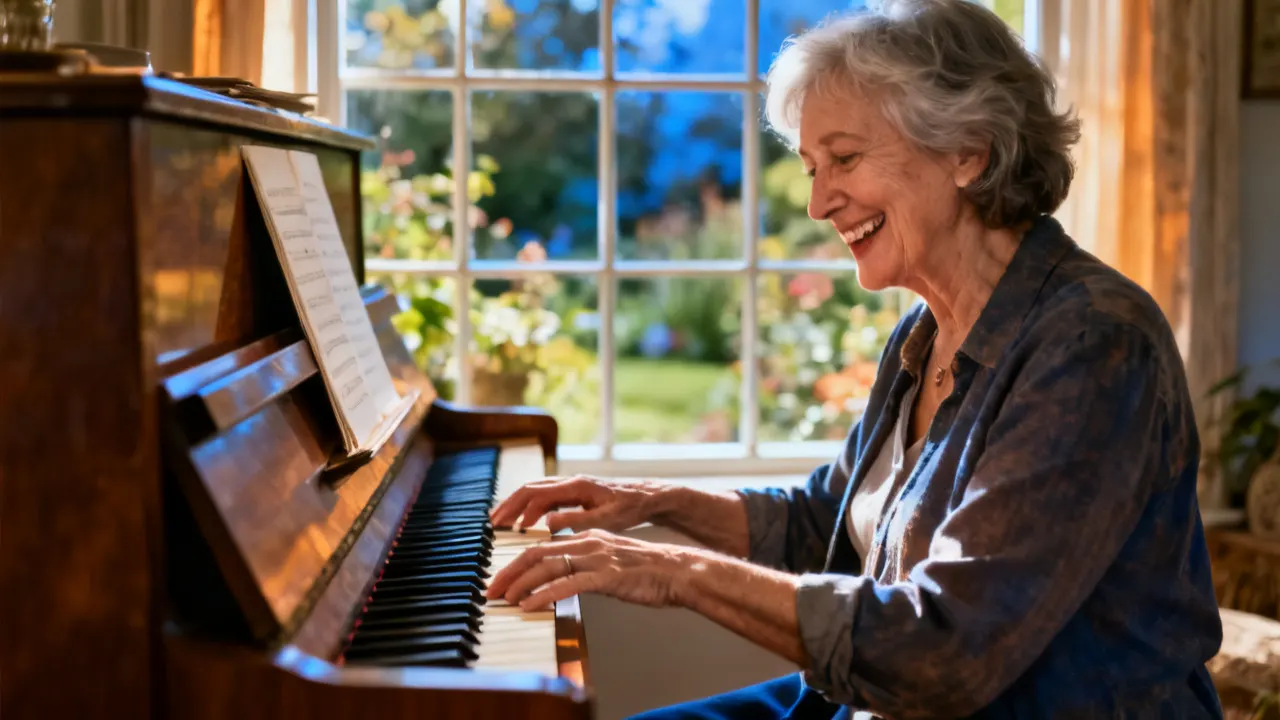
Piano is a wonderful hobby to begin at any age, and starting later in life has real charms. You have time to savor the process, a lifetime of favorite songs to draw from, and no exam to pass. Seniors who take up piano often say it gives their week a pleasant rhythm and a project to look forward to. This guide covers the setup, pacing and songs that make lessons comfortable and enjoyable, plus how to choose between teachers, courses and apps.
This is general hobby guidance, not medical advice. If you have pain or a condition affecting your hands, wrists or eyesight, speak with your doctor or a therapist about what suits you.
Why later-life piano works
- You choose the music. No required pieces, no tests. Play what moves you.
- Time is on your side. Unhurried practice sessions at your best time of day are a luxury younger learners rarely have.
- Life experience helps. You know how to learn: break a task into pieces, repeat, rest.
- It is social if you want it. Playing for family, a friend or a small group adds meaning.
Pace is your friend. A relaxed schedule you keep beats an ambitious one you drop.
Comfort first: your setup
A comfortable setup prevents most of the issues that discourage new players.
The instrument. A digital piano with weighted keys feels close to an acoustic one, and a headphone jack lets you play any hour. A lightweight keyboard is fine too, if it is full-size and stable.
The bench or chair. Choose a firm, stable seat with no armrests that block your elbows. Your forearms should be roughly level with the keys, your feet flat or on a small footrest. If your seat is too low, add a firm cushion.
Lighting. Good, even light without glare lets you see the keys and any music clearly. A lamp over the music stand helps.
Reading size. Choose large-print music or use a tablet where you can enlarge notation. Note names written above the staff can be a helpful bridge.
Position of the stand. Place the music or screen at eye level so you are not craning your neck.
Pace and sessions
Think short, regular and kind.
- Ten to fifteen minutes per session is a very good start.
- One or two short sessions a day, with a rest between, can feel better than one long one.
- Take breaks. Stretch your hands, roll your shoulders and breathe every ten minutes.
- Stop if anything hurts. Discomfort is a signal to rest and adjust your posture or position.
- Warm up gently. Slow five-note patterns with relaxed hands, with no force.
For a ready-made session plan, see our piano practice routine and shorten it to suit your energy.
A gentle first month
Week 1: Learn the layout of the keyboard. Find middle C and name the white keys. Spend a few minutes each day just listening to the sound of each note.
Week 2: Play a five-note melody with your right hand, slowly. Choose a tune you know, such as a hymn or lullaby.
Week 3: Add the left hand with a single note held under the melody.
Week 4: Learn one chord and use it to accompany a simple song, or try a different tune.
There is no deadline. If a step takes three weeks, take three weeks. Our general guide to learning piano as an adult has a longer plan you can borrow from.
Songs that make practice a pleasure
Pick music you already love so you can hear whether you are getting it right. Good first choices include:
- Hymns and spirituals, with slow tempos and clear melodies.
- Folk songs and lullabies.
- Gentle classics such as Ode to Joy and Greensleeves.
- Simplified standards from the music of your own era, using easy arrangements.
Our list of easy piano songs for beginners groups tunes by difficulty so you can progress step by step.
Ways to learn
A private teacher. A patient teacher who works with adult beginners can tailor the pace and notice details about posture and hand comfort. Ask about experience with older learners.
Community classes. Libraries, senior centres and community music schools often offer group sessions. They are friendly and social.
Video courses. Self-paced courses let you pause and repeat as often as you like.
Guided apps. An app that builds a plan from your level and goals can keep things simple. Keyora starts with a quiz and then gives you a path of courses, a songbook and gentle challenges, so you do not have to decide what to practice. Look for large text, clear instructions and the ability to repeat anything.
Many people combine two: an app for daily practice and a teacher or class for company.
Reading music and ear
Notation is helpful but not required at first. Begin with note names and patterns, then add reading gradually. A few minutes per session on how to read piano notes is enough. Also try playing by ear: pick out a simple tune you know. Many seniors find this deeply satisfying.
Staying motivated
- Keep a small notebook of songs you have learned, and add to it.
- Schedule a "mini concert" for a family member once a month.
- Play at the same time each day, linked to a habit like morning tea.
- Celebrate small wins: first full song, first chord change, first recording.
- Be gentle about mistakes. They are how fingers learn.
Playing with family and friends
One of the quiet pleasures of learning later in life is sharing the music. Set a small, friendly goal: a lullaby for a grandchild, a hymn for a gathering, a favorite song to accompany a sing-along. You do not need a flawless performance. A warm, steady version of a simple tune is more welcome than a perfect one nobody hears. Choose a date, practice the piece in short sessions, and play it first for yourself, then for one trusted listener. This turns your practice into a gift and gives the weeks a pleasant direction.
If you enjoy company while learning, look for a community class or a friend who also wants to start. Even a monthly cup of tea where each of you plays one piece is enough to keep the habit alive.
When progress feels slow
Hands that are new to the keyboard need repetition, and it is normal for a passage to feel stubborn for several days. Rest is part of learning: a piece that was messy on Monday often sounds better on Tuesday without any extra effort. Keep sessions short, play the hardest bars slowly, and stop before you are tired. Remind yourself why you started, and play one thing you already know well at the end of each session so the last notes you hear are pleasant ones.
Final thoughts
Piano in later life is about pleasure and steady curiosity. Set up a comfortable space, practice in short sessions, choose songs you love and move at your own speed. Within a few weeks you will be playing music that makes you smile, and that is the best lesson of all.